A practical spotter’s guide to what’s “normal”, what’s a mutation, and what’s a genuine problem.
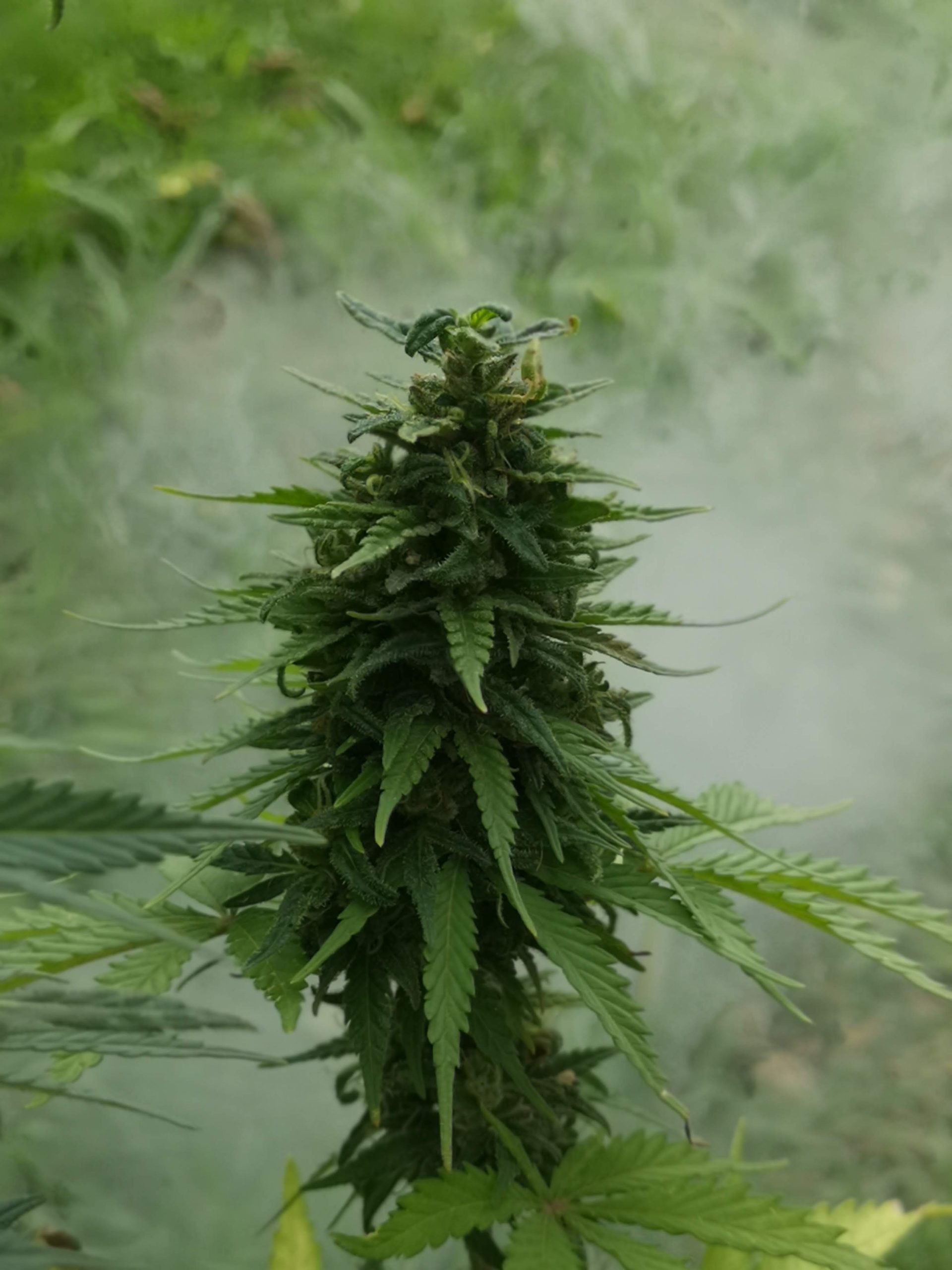
1) What “normal” cannabis looks like (so you know when something’s off)
Core plant parts you’ll hear people mention
- Fan leaves: the big, classic “cannabis-shaped” leaves that do most of the photosynthesis.
- Sugar leaves: smaller leaves close to the flowers, often stickier because they sit near resin glands.
- Trichomes: tiny resin glands that can look like frost/sparkles on flowers and nearby leaves.
- Pistils: hair-like structures on female flowers (often lighter early, darker later).
- Nodes/internodes: where branches/leaves meet the stem, and the spacing between those points.
Normal variation (not automatically “a problem”)
Cannabis naturally varies by genetics (cultivar/strain) and environment. Some plants are naturally:
- narrower or broader leafed,
- more aromatic or less,
- “frostier” with more visible trichomes,
- taller vs bushier.
The big tell is sudden change, clear patterns (top vs bottom leaves), and spreading clusters (spots/mould increasing over time).
2) Abnormalities: the big buckets
Most abnormalities fall into four main types:
- Genetic quirks (mutations) – odd shapes but not always harmful
- Physiological stress – the plant reacting to heat/cold/light/wind/water swings
- Nutrition/toxicity patterns – deficiency or excess showing up in predictable ways
- Pests & disease – living organisms causing damage (often progressive/spreading)
3) Genetic mutations and “weird but interesting” traits
These are the ones that make okes say, “Yo, that plant is doing the most.”
A) Variegation (patchy white/yellow sections)
What you see: marbled or streaky pale areas, sometimes symmetrical.
What it often means: chlorophyll isn’t forming in those sections (genetic or stress-related).
Why it matters: less photosynthesis in pale areas; can be cosmetic or reduce vigour.
B) Fasciation (flattened stems / “crested” growth)
What you see: stems that look flattened, fan-like, clustered tips, weird multi-tops.
What it often means: a growth-point mutation or disruption.
Why it matters: unusual structure; sometimes more prone to weakness or infection.
C) Whorled phyllotaxy (3+ leaves per node)
What you see: instead of the usual two leaves/branches per node, you get three or more.
What it often means: mutation affecting growth pattern.
Why it matters: can look extra bushy; not automatically bad.
D) Foxtailing (elongated, stacked flower shapes)
What you see: flowers form spires/towers instead of compact clusters.
What it often means: genetics, or stress (often heat/light) depending on context.
Why it matters: changes density/airflow; sometimes links to stress sensitivity.
4) Physiological stress (the plant’s “body language”)
A) Heat/light stress (leaf edges “taco”, droop, brittle look)
What you see: edges curl upward, leaves look thin, possible pale/bleached patches.
What it often means: too much heat/intensity or sudden exposure shift.
Why it matters: sustained stress weakens the plant and increases disease risk.
B) Cold stress (slow growth, purpling, limp posture)
What you see: slowed development; sometimes purple hues (can also be genetic).
What it often means: prolonged low temperatures or big day/night swings.
Why it matters: weaker resilience; easier target for pathogens.
C) Water stress (over- or under-watering)
What you see:
- Under: dry, crisping leaves; persistent wilting.
- Over: droopy leaves that feel “heavy” rather than dry.
Why it matters: stressed roots invite rot and disease.
5) Nutrient patterns (deficiency vs excess)
Nutrient issues usually show patterns, not random chaos:
- Older/lower leaves first often points to mobile nutrients (like nitrogen).
- New/top growth first often points to less-mobile nutrients (often iron-type patterns).
A) Nitrogen deficiency (classic “fading from the bottom”)
What you see: lower leaves go pale → yellow, may drop.
Why it matters: reduced overall growth capacity.
B) Magnesium-type pattern (interveinal yellowing)
What you see: yellowing between leaf veins, often on older leaves; veins stay greener.
Why it matters: photosynthesis efficiency drops.
C) Iron-type pattern (new growth paling first)
What you see: new leaves pale/yellow while veins may remain greener.
Why it matters: growth tips struggle; can look dramatic quickly.
Important: “Deficiency-looking” symptoms can also come from root issues, pH imbalance, overwatering, or disease. Overcorrecting with “more stuff” is a common self-own.
6) Pests: tiny skelms that cause big problems
A) Spider mites
What you see: fine speckling (“stippling”), pale dots, possible webbing.
Why it matters: they multiply fast and steadily weaken the plant.
B) Thrips
What you see: silvery streaks, tiny black dots, distorted leaf texture.
Why it matters: ongoing feeding damage and stress.
Clue: pests usually create damage that repeats and spreads.
7) Diseases: the serious abnormalities (often progressive/spreading)
A) Powdery mildew (PM)
What you see: white powdery patches on leaves (often tops first).
Why it matters: spreads fast, reduces plant function, and can become a recurring issue.
B) Botrytis / bud rot (grey mould)
What you see: grey-brown rot, collapsing tissue; can hide inside dense flower sections.
Why it matters: can move quickly in humid conditions and ruin sections fast.
C) Leaf spot diseases (spot + yellow halo patterns)
What you see: brown dead spots, sometimes with yellow rings/halos.
Why it matters: reduces leaf area and overall vigour if it spreads.
D) Root and crown rots
What you see: wilting that doesn’t match soil moisture; stunted growth; roots that brown and break down.
Why it matters: can be difficult to reverse once advanced.
General best practice for suspected disease is containment and hygiene: isolate affected material, avoid cross-contamination, and keep tools/areas clean.
8) “Sex” abnormalities (important for identification and expectations)
Hermaphroditism (“hermie” traits)
What you see: a plant shows both male and female reproductive structures.
What it often means: genetics and/or stress can contribute.
Why it matters: in production contexts it can lead to unwanted seed formation and inconsistent outcomes.
9) A quick diagnostic flow (no drama, just method)
When you spot something weird, run this checklist:
- Is it spreading fast?
- Yes → think pests/disease first.
- Is it patterned (top vs bottom, veins vs edges)?
- Yes → think nutrition/uptake or systemic stress.
- Is it one odd branch or whole plant architecture?
- One area → local damage/mutation.
- Whole plant → genetics or environment.
- Is there visible evidence? (powder, spots, webbing, mould, insects)
- Evidence present → follow the pest/disease pathway.
10) Common “false alarms” (things people misread)
- Purple hues can be genetics, not automatically a problem.
- Trichome sparkle is normal resin—mould looks fuzzy/powdery and spreads.
- One-off leaf weirdness can be a mutation; watch whether it spreads.
